
The announcement that Mr. Robert Aland had passed away on Saturday morning cast a deep gloom over the community, for no man in the district was more widely known nor more generally respected. The connection between the late Mr. Aland and the State of Queensland goes back a period of half a century, which is a long time in the history of a state which has not had responsible government for that length of time.
It may be said of him that he was thoroughly versed in the history of Queensland from its inception. The late Mr. Aland had not attained his majority when Queensland was vested with the powers of autonomous government. He came to Australia when quite a lad with a strong determination to make his own way in the world, and during his earlier years in Australia he resided mostly in Ipswich, which was then the centre of commercial and intellectual activity in the Northern district of New South Wales. Among the Ipswichians of that early day he rapidly earned a name for probity and honour, which he carried to the grave untarnished. In all matters of public interest, even at that early age, he took an intelligent and prominent interest and laid the foundation of a long and useful career for the public good.
That he was one who felt the responsibilities of life even at an age when the youth of Queensland are more deeply interested in cricket and football may be gleaned from the fact that he was married before the age of twenty-one, and in the partner of his choice found a help-mate and comforter who never failed him through his long, useful, and honourable career.
It is imaginable that a man of Mr. Aland’s nature would have entered heartily into the separation movement, and when in 1878 there was evinced considerable feeling on the question whether Queensland should contribute £1,000 as a gratuity to the widow of Dr. Lang, with whose name the separation movement was so closely associated, Mr. Aland, on the public platform, firmly and consistently supported the proposition even though he ran the risk of seriously prejudicing his election chances. In this action the true character of the man shone out. He would do in the face of hostility for right’s sake what he would not do on the wave of popularity for personal gain or aggrandisement.
The growing importance of the Downs as a place of settlement naturally attracted the attention of so enterprising a young man as Mr. Aland, and consequently the latter half of the sixties saw him settled among the business community of Toowoomba, as an ironmonger, in the south end of Ruthven street, then the centre of the greatest business activity.
The interest he learned to take in public affairs whilst located in Ipswich did not leave him on removing across the Range. Whenever opportunity afforded, he took a share in the work of assisting to advance the progress of any public institution or movement that had for its object the welfare of the people.
He had not been long in Toowoomba before he was chosen as an alderman, and in the years 1874 and 1875 filled with distinction to himself and advantage to the town the position of Mayor. It was during the term of his Mayoralty that the first water supply scheme was carried to a successful issue. The vigour and honesty of purpose which he showed in all his public as well as private transactions commended him to the citizens at all times, and when the redistribution
of seats in 1878 gave two members to Toowoomba, he was invited to stand as a candidate. It is interesting to note on going back to his first political speech as a candidate, that he laid down a policy which he adhered to throughout the remainder of his life.
He advocated —eralism in politics. He was a warm advocate of close settlement of the right class of agriculturists on the land, and for the purpose of unlocking the rich agricultural lands of the Downs advocated at that early day a land tax to burst up large estates. He lived to see nearly all of the large estates of the Downs devoted to close settlement without the imposition of a land tax. Though a believer in the construction of public works out of loan funds he deprecated large borrowing, as he feared it might lead to financial embarrassment of the State. In this matter the perspicacity of his mental vision was not at fault. He also warmly supported every movement that had for its aim the education of the masses.
To the end Mr. Aland remained firm in his belief in these political tenets. He was not successful in securing a seat, being third out of five, but before the expiration of the Parliament elected in that year a vacancy in the representation of this electorate occurred through the death of the junior member. Mr. G. H. Davenport. At the by-election which took place in 1881 Mr. Aland was returned, and with Mr. Groom sat continuously for Drayton and Toowoomba for twelve years. During this period his representation was characterised by an unswerving assiduity in the discharge of his duties, and an independ- i once of judgment on all important issues of the day that was the pride of his friends, and won him the sincere respect and esteem of those whose political views and aspirations did not coincide with his. At the election of 1893 he found that his views on certain important issues differed very materially from those held by the general body of electors, but ‘honest Bob Aland,’ as he was familiarly called, would not trim his political sails to suit a favouring breeze. He ceased to represent Drayton and Toowoomba, but he preserved unblemished his reputation for honesty of purpose and sound political, morality.
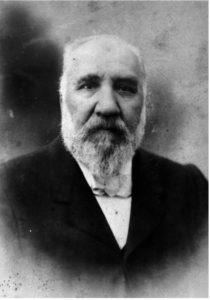 Mr. Aland was closely associated with the working of many local institutions of a public and semi-public character, and brought to his tasks, talents and industry that contributed to their success. He was associated with the Toowoomba Hospital for a period of nearly thirty years. At one time he was honorary secretary to the institution, but for a quarter of a century he had been on the board of management, and as Chairman for the creator part of that time exercised a watchfulness over its financial affairs that ever kept the institution in a sound condition. Without any disparagement of the services of other gentlemen connected with the management of the institution it may be truthfully said that it will be difficult to find one to fill his place who will devote so much of his time to the affairs of the hospital as did Mr. Aland.
He had also at heart the welfare of the Toowoomba Grammar School, and for many years had been the Chairman of Trustees. Here, too, he leaves a blank that will not be readily filled. As one of the Cemetery Trustees he also rendered good public service. Mr. Aland was also one of the trustees of the Methodist Church in this town, and in the management of its affairs his influence was likewise felt on the side of good. He took a great interest in Masonry and rose to distinction in Masonic circles. In many other ways he delved to promote the progress of our social and business life, and his death creates many blanks which it will be difficult to fill.
A severe chill which he experienced some three weeks ago laid the foundation of Mr Aland’s illness. Though from the beginning his case was regarded as -v -v»n ii’uiiiuvil no extremely critical it was hoped that his naturally strong constitution would carry him through the attack. The hopes of his friends were, however, doomed to disappointment, for notwithstanding the most assiduous medicinal and nursing attention he failed to withstand the attack. He knew the end was approaching and awaited it with calm resignation which is the product of a life ground in well-doing. He was sixty-seven years of age.
He leaves a widow, six daughters, Mrs Leslie, Mrs. Woolcock, Mrs. Fletcher. Mrs. Harper. Miss Aland, sister Ethel of the Hospital nursing staff and Miss Dot Aland and four sons Messrs William, Robert, Frank and Leslie Aland, with whom the deepest sympathy is expressed.
Though he desired to have a very quiet funeral, the deep regard and esteem felt for him by all classes of the community was such that his funeral cortege was one of the longest, if not the longest, that has been seen in Toowoomba, being more than a mile long. The coffin was of polished cedar with mountings showing Masonic emblem designs, and on the coffin was deposited his Masonic clothing.
Included among the hundreds who assembled to pay the last sad tribute of respect were Sir H. M. Nelson (Lieutenant Governor), the Mayor (Alderman Burstow), and other members of the Council, Messrs. J. Tolmie and J. Fogarty, M.M.L.A., the Hospital Committee, Grammar School Trustees, Cemetery Trustees, members of the Chamber of Commerce, the Police Magistrate, the leading professional and business men of the community, and a great concourse of private friends. The pall-bearers were Messrs T.S. Burstow (Mayor), C. Campbell, J. A. Noble, T. K. Lamb, F. J. Patterson, and G. Partridge.
The services at the grave were conducted by the Revs. J. G. Martin and Blamires, of the Methodist Church, and as the evening sun was dipping behind the hills there was laid to rest one who had well played his part in the battle of life, whose untiring energy and thoughtfulness had helped to lighten the load of care of many a fellow-man, and who leaves behind him a name that will be honoured by those who knew him, and a record that will be an inspiration to others who may have to encounter the difficulties of the path he trod so well.
Source
National Library of Australia – Digitised Newspapers
Darling Downs Gazette (Qld. : 1881 – 1922), Monday 21 March 1904, page 2